Shaping the Future of Beauty: Crafting the Ideal Aesthetic Medicine Curriculum

22 November, 2023 Dr. Ahmed Haq (MB,BCh,BAO,LRCPS&I,Msc)

Blending Theory and Practice:Mastering the Art and Science of Aesthetic Medicine

The explosion of the aesthetic industry over the last 10 years has been remarkable, not only in the number of patients seeking treatments but also in the variety of facial procedures available, which have increased exponentially. However, despite this rapid growth and evolving landscape, many training academies remain anchored to outdated training methods that were prevalent 20 years ago. This stagnation in educational evolution fails to meet the increasing consumer demand and the heightened liability shouldered by aesthetic practitioners. Additionally, the era of instant online feedback, like those unforgiving Google reviews, has added a new dimension of accountability, making the need for a modernized and comprehensive curriculum in aesthetic medicine more crucial than ever.

Designing a User-Friendly Curriculum: Aligning with Market Demand in Aesthetic Medicine

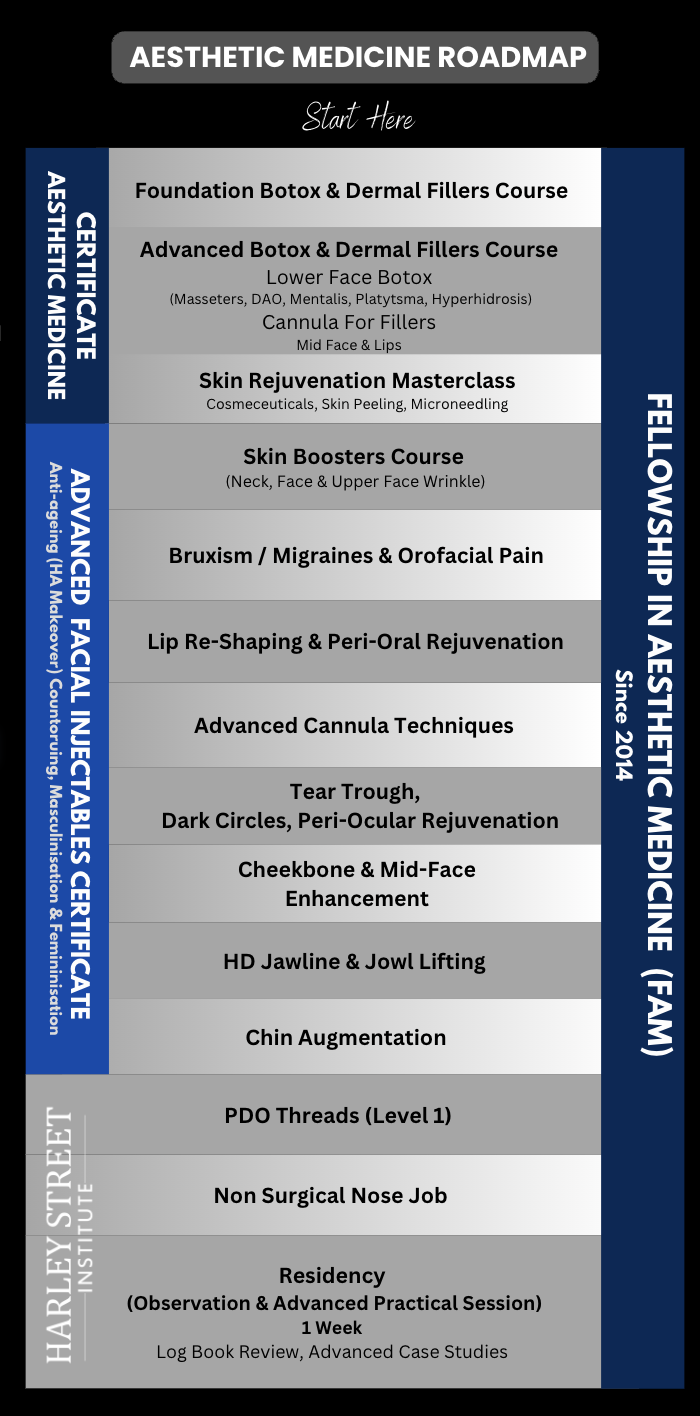
Our curriculum begins with a foundational day focusing on Botox and dermal fillers, catering to the most commonly requested treatments. As you explore the curriculum outlined below, you'll also notice our most advanced training segment, the Fellowship. This represents the pinnacle of training that all aesthetic practitioners should aspire to achieve, allowing for a personalized learning pathway. Our course offerings extend beyond Botox and dermal fillers, including skin rejuvenation courses. The structured layout of our curriculum is designed to facilitate progressive skill development, as depicted in our detailed course table.

Many trainees, often inexperienced in selecting courses, can easily be swayed by marketing claims promising comprehensive training in just a day or two. However, the reality is far from these assertions. It's impractical to master every aspect of aesthetic medicine in such a short span; in fact, developing these skills takes years. Moreover, most trainees are unfamiliar with the specific terminology used in our field. For instance, terms like 'muscle procerus' or identifying a 'Glogau Grade 3' facial condition are not commonly recognised or understood by newcomers. This highlights the need for a more in-depth and realistic approach to aesthetic medicine education.
The foundation course in Botox and dermal fillers is highly popular and frequently requested. This course provides a thorough understanding of Botox, focusing on its application for the upper face, and introduces the use of dermal fillers for treatments like nasolabial folds and lip enhancements, including the corners of the lips. We've trained a wide range of professionals, from plastic surgeons to dentists, and it's evident that even for them, this field presents novel challenges. Handling a 1ml syringe with a 32G needle, aiming for millimeter precision, can be daunting; hands tremble, and precision is key. Unlike many medical specialties, aesthetic medicine demands such precision. For instance, considering that the dermis in most facial areas ranges from 0.5-2mm in thickness, practitioners must learn to accurately inject into its superficial, medium, and deep layers. This level of detail and precision underscores the specialized nature of aesthetic medicine training.

ASK YOUR TRAINING PROVIDER?

What skills & knowledge will you gain post-course?

Aesthetic medicine is a specialty where millimeter precision is paramount, demanding practitioners who exhibit exceptional manual dexterity.

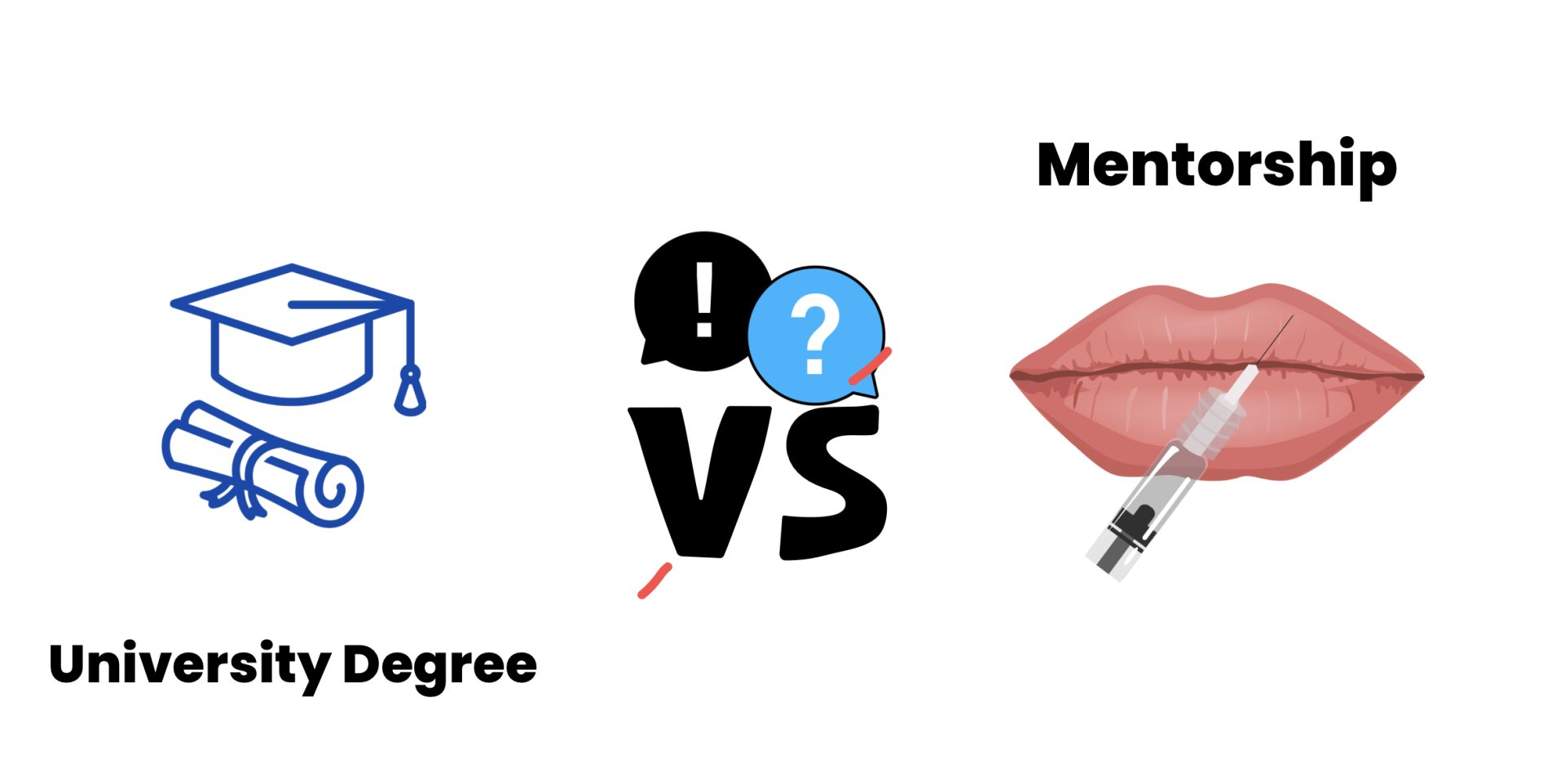
University Masters In Aesthetic Medicine Or Practical Courses By Training Academies?

When it comes to choosing between University Masters in Aesthetic Medicine and practical courses offered by training academies, starting with practical courses is advisable. Take a look at our curriculum for beginner-level combined courses that cover popular skin rejuvenation procedures and injectables. Our focus is on practical skills, which are crucial in this field.

While University Masters in Aesthetic Medicine have gained popularity, they often fall short in providing hands-on experience. Some programs may include a brief observation period in a dermatology clinic, but this is usually because actual aesthetic medicine procedures are not conducted in university hospitals.
Therefore, prioritising your funds for quality practical courses is essential. These courses should offer hands-on experience with experienced, patient mentors. While a university degree might be a nice addition to your wall, it's the practical skills that truly count in attracting and treating patients – something that patients rarely inquire about or consider when choosing a practitioner.

Starting A Practice Thinking Business

Starting an aesthetic practice can indeed be a challenging endeavor, but with the right approach, it doesn't have to be overwhelming. The first step is to clearly envision where you want your practice to be in the next five years. This foresight will guide your initial steps and decisions.

Once you have a vision, the next step is to get started, and a strategic approach is to focus on treatments that don't require a significant initial investment. It's common for new practices to feel pressured into purchasing expensive equipment like heavy-duty laser machines, but this can be an unnecessary financial burden for a practice that's just finding its footing.
Instead, consider beginning with treatments that have minimal upfront costs. Procedures like Botox, skin peels, dermal fillers, and microneedling not only require less financial outlay to start but also are among the most sought-after by clients. These treatments can offer a high return on investment and allow for a gradual build-up of your practice. By focusing on these services, you can grow your client base and revenue, which in turn can fund future expansions or investments in more costly equipment. Remember, the key is to start small, focus on quality, and expand as your practice grows and becomes more established.

In conclusion, embarking on the journey to establish your aesthetic practice can be a fulfilling and profitable endeavor. By focusing on a clear vision, starting with low-cost, high-demand treatments, and gradually building your practice, you are setting a strong foundation for success. Remember to stay patient, persistent, and always prioritise the quality of your services. With dedication and smart planning, your practice can flourish and become a well-respected name in the field of aesthetic medicine. Best of luck on this exciting journey – your dedication and hard work are sure to pave the way to a thriving and successful practice!